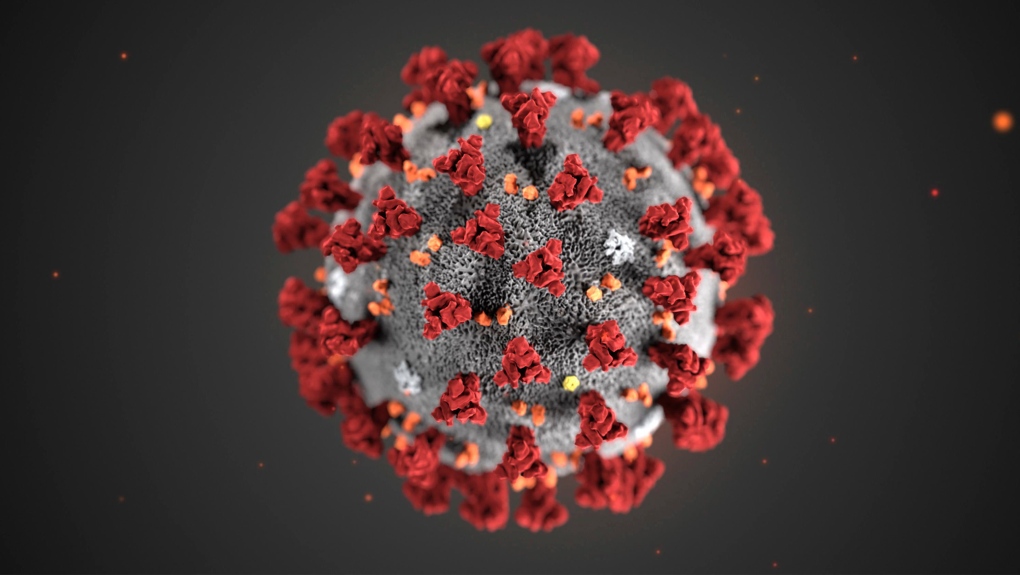
COVID-19 has been already assigned as a pandemic worldwide now. It is now a global problem affecting all of our day to day lives. Almost all the methods of combating the virus at our disposal at this moment are essentially social distancing and maintaining hygiene until a cure is discovered. And while I write this post the death toll worldwide is 17,159 with 470,973 people infected. Be sure when you read this, these numbers have already swelled up.
So while we wait and do our bit by maintaining social distance, I am here today to show you how we all can pitch in our compute power to help researchers find a cure for COVID19.
Why Protein Folding? Why should you care?
How a protein “looks” in 3D is essential for developing new drugs,
especially for new viruses. COVID-19, for example, has really spikey proteins that jut out from its surface. Normally, human cells don’t care—they won’t let the virus inside. But COVID-19’s spikey proteins also harbor a Trojan Horse that “activates” it in certain cells with a
complementary component. Lung cells have an abundance of these factors,
which is why they’re susceptible to invasion.
Protein folding has been a decades-long, fundamental problem in biochemistry and drug discovery. Almost all of our existing drugs grab onto certain proteins to work, so identifying protein structure is akin to surveying the enemy landscape and figuring out the best attack point simultaneously. The problem is the genetic code doesn’t translate to how proteins look. When it comes to a new virus, without predicting protein structures we’re basically fighting viruses and diseases as if they were the Invisible Man.
Bottom line: if a drug is going to “fit” into a protein like a key into a
lock to trigger a whole cascade of nasty reactions, then the first step is to figure out the structure of the lock. That's where Folding@home comes in.
Folding@Home
Some of us used to contribute our computing power ar SETI@Home which dedicated all those compute power finding ET throughout the universe. While that project has just sunset, we now have Folding@Home which dedicates its computing resources on protein folding to find cures for various diseases including COVID-19.
It simulating the dynamics of COVID-19 proteins to hunt for new therapeutic opportunities.
What do you need?
- A computer running OSX/Windows/Linux
- A stable internet connection
How do you set it up
Setting up a Folding@Home instance at your own PC is very straightforward. Just follow the steps below
- Install the client from: https://foldingathome.org/iamoneinamillion/
- Follow the screencast below
 |
| For windows, you won't really need to do anything else |
- Once the install is done you will be shown a welcome page and then your configurable options. Please see the video below to know step by step what you can configure more
(if you cannot load the video, here is a short animation on the steps)
 |
| The video has step by step voice over guiding you through the parameters |
In the end, you should have a dashboard like this and happily helping researchers getting a cure for COVID19
 |
| This is the final dashboard showing your contribution parameters |
Optional Parameters:
You don't really need to set a teamid. But if you decide you use this teamid we as a team would be contributing towards the effort and can see ourselves as a team (and also individual) in the leaderboard.
The Team details used are:
TeamID: 248733
Name: Covid19India
Comments
Post a Comment