OpenIoT Summit 2016 Report

I recently had the pleasure to present at the OpenIoT Summit 2016 by Linux Foundation where I was representing Mozilla as a Mozilla TechSpeaker.
The event was quite nice and had a lot of tracks. A little description from their website
Introducing the new OpenIoT Summit…Billions of devices, trillions of dollars of opportunity. Building on successive waves of Web, mobile, and cloud, and powered by a revolution of cheap powerful hardware that is ever connected, the promise of the Internet of Things has finally arrived. It’s here, it’s real and it is creating untold opportunity.....Unlike existing IoT events, IoT Summit if for technologists and by technologists. Experts from the world’s leading companies and most important open source projects will present the information you need to lead and succeed successful IoT developments so that you can bring smart connected products and solutions to market.OpenIoT Summit is the only IoT event focused on the development of IoT solutions. OpenIoT Summit is a technical event created to serve the unique needs of system architects, firmware developers, software developers and application developers in this emerging IoT ecosystem.OpenIoT Summit delivers the knowledge you need to deliver smart connected products and solutions.
The agenda involved some really interesting talks by a lot of people from different technologies. You can have a look at the diverse motley of talks they had here. Some of them I really liked were
- "Google ProjectARA Power Management Challenges" by Patrick Titiano, Baylibre
- Keynote: Towards IoT Convergence - Bryan Che, General Manager, Cloud Product Strategy, Red Hat
- AllJoyn 101: Make Smarter Devices - Ivan Judson, Microsoft
- An IoT OS Security Architecture That is so Boring That You Can Sleep Soundly at Night - Ismo Puustinen, Intel Germany
They also had a keynote presentation by Linus Torvalds, at a time when we were frantically checking in codes to Github.
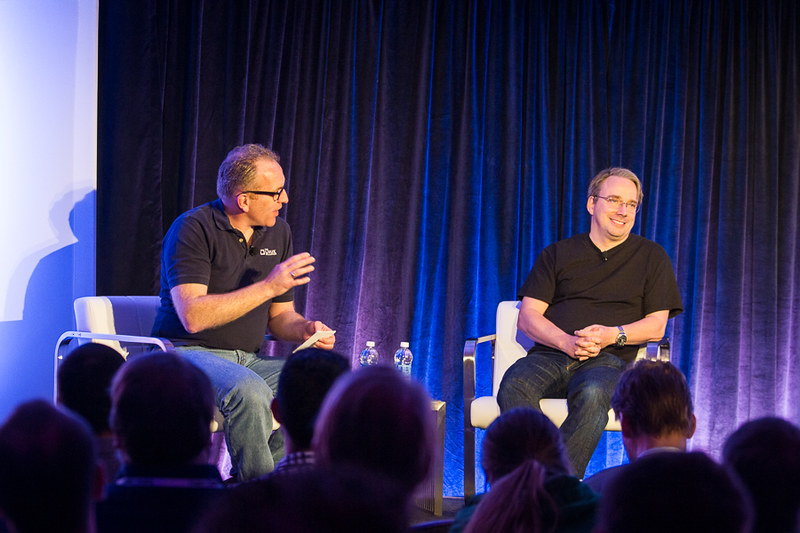 |
| A glimpse of the keynote |
Mozilla Tech Evangelist and manager Dietrich Ayala was my co-speaker with me for the first talk. And being the awesome speaker he is eventually he completely owned the talk!
You can see him giving the talk in the following video. I was still checking in the code at that time -_-
We also got an article and mention later. Yay!
Dietrich completely rocks!
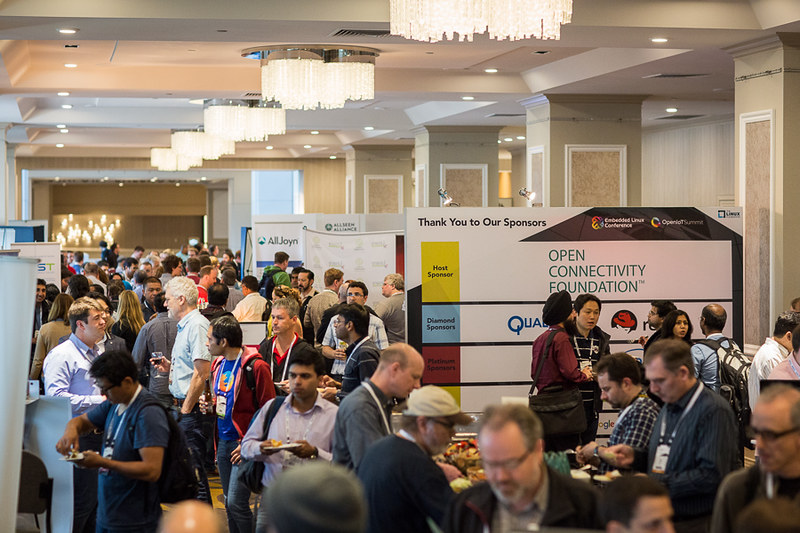
There were a lot of stalls with a lot of very interesting projects in showcase.@dietrich of @mozilla proposed a simple+affordable method of home automation https://t.co/WaDX4qDM6j #OpenIoTSummit pic.twitter.com/pfYtheFxWH— The Linux Foundation (@linuxfoundation) May 23, 2016
The next day I had my another talk on WebVR. Which literally had people scratching their head. You can see the talk below.
If you want to see some more codes and some live coding demos. Please head over to my other post where I enjoyed an awesome time teaching teenagers about WebVR.
Conclusion: This was a unique experience. I met a lot of people involved with a lot of projects who all seemed to be very interested in what Mozilla doing in IoT and VR space. I got a lot of idea I could adopt from other projects, primarily Alljoyn. Brillo and Weave are something I would look out for. I unfortunately had to leave on 6th so missed all the sessions that day. But I thoroughly enjoyed my experience here.
Comments
Post a Comment